At a time social media is often criticised for its misuse, Roselyn Kasunda Blackson is harnessing its power to grow her agribusiness and inspire young women in agriculture.
The young agripreneur and founder of Peculiar Honeybee Products and Services (Pehops) is using Facebook and TikTok not only to market her honey products, but educate aspiring beekeepers.
She produces and packages honey, supplies beekeeping equipment, offers consultancy and training, and creates employment opportunities, including women and people with disabilities.
Roselyn’s journey into beekeeping began in 2018 when she graduated from the Lilongwe University of Agriculture and Natural Resources (Luanar) and chose to try entrepreneurship rather than wait for formal employment.
She explored opportunities in agriculture, drawing on the knowledge she acquired during her studies.
Roselyn developed interest in beekeeping after attending a field training conducted by a beekeeper through St Paul’s Agriculture Training Centre, where she did her internship.
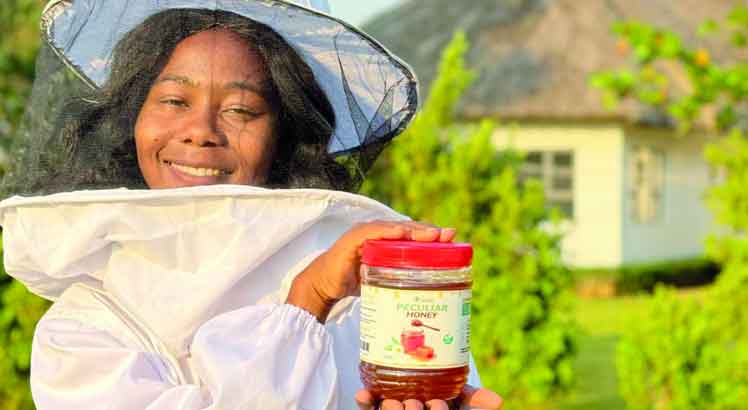
She started off with a 10 beehives, bought with money she saved from school.
“When I started, it was difficult because I was a young woman entering a field uncommon among women. People warned me that bees were dangerous and could even kill, while misconceptions about beekeeping discouraged some people from considering it as a viable business,” she said.
Her determination gradually paid off as she expanded beyond honey production into packaging, supplying beekeeping equipment, consultancy and training.
One of the turning points in Roselyn’s beekeeping journey came when she appeared on Spotlight, a local news platform and began attracting more media attention.
“When different media houses started contacting me for interviews, my work got introduced to a wider audience, bringing calls from people interested in learning about beekeeping. As demand for knowledge about the sector grew, I found myself taking on the role of trainer and mentor,” she said.
Today, she is extending that reach through Facebook and TikTok, using the platforms to showcase her work, engage potential customers and encourage others to venture into beekeeping.
“Through my social media platforms, I have challenged and encouraged many people to venture into beekeeping,” she said.
Initially, Roselyn used her personal accounts to share information about her work.
As the business grew, she created separate social media accounts for Pehops, allowing her to focus more on promoting the brand and its products.
Through the accounts, she shares information about beekeeping, showcases her products and connects with people interested in the sector.
“The online engagement has also helped me reach potential customers and aspiring beekeepers beyond my immediate community. I have received messages from people explaining how my work inspired them to begin their own beekeeping journeys,” she said.
“Rather than limiting my work to producing and selling honey, I am using my online presence to encourage others to see beekeeping as a possible source of income and a long-term career.”
Chikumbutso Kambala of Rising Farms, one of the beekeepers inspired by Roselyn’s journey, said watching Roselyn’s videos on social media strengthened her confidence and motivated her to start her own beekeeping venture.
Kambala is expecting her first honey harvest this year.
“Seeing a young woman like Roselyn in beekeeping and witnessing her passion for honey production inspired me. It made me realise it is possible and watching her videos on social media encouraged me not to wait any longer, but to establish my business,” she said.
Kambala said she has learnt every business needs determination and there is huge potential in honey production.
“Roselyn has always been there to offer guidance and support and I appreciate her mentorship,” she said.
As she prepares for her first harvest, Kambala is already looking towards expansion. She plans to increase her operation from 350 beehives in 2026 to 1 000 in 2027.
Pehops has expanded its operations beyond honey harvesting to include the construction and supply of beehives, the sale of beekeeping accessories, installation of hives, consultancy and training.
The enterprise also produces other bee-based products, including beeswax, lip balms and candles.
It currently has about 2 100 beehives. It employs 39 people on temporary, seasonal and permanent basis.
The business has trained about 5 000 people.
Roselyn said the enterprise harvested 12 tonnes of honey last year, but production fell to seven tonnes this year following unfavorable weather patterns.
Her experience comes at a time when women’s participation in agriculture is attracting renewed attention, particularly as climate change and economic pressures threaten food systems.
A report released on October 15 2026, by the CGIAR Gender Accelerator warns that women in low-income countries risk being left further behind men as pressures on global food systems intensify without targeted interventions.
The report identifies digital technologies as having significant potential to help bridge gender inequalities, while warning that women continue to face barriers to accessing and benefiting from these tools.
It cites research showing women in Kenya, for example, are up to 25 per cent less likely than men to access digital climate advisory services because of structural gender barriers.
The findings highlight an important distinction: while digital platforms can open doors for women in agriculture, access to technology and the skills to use it effectively remain essential.
The report calls for more comprehensive interventions, including inclusive infrastructure, improved access to information, safer working environments and measures to challenge social norms that limit women’s participation and decision-making.
It also emphasises the importance of investing in women as leaders in food systems, rather than viewing them solely as labourers.
While social media has opened opportunities for Roselyn, using it effectively comes with challenges.
She said creating content that attracts audiences requires confidence, digital skills and access to suitable equipment.
“For agricultural entrepreneurs, good-quality photographs and videos can help demonstrate products and processes, build credibility and attract potential customers,” she said.
However, the cost of phones and cameras can be prohibitive for people starting small businesses.
Roselyn said some people criticise content creators when their photographs or videos are of poor quality, with such reactions sometimes affecting their confidence and self-esteem.
She added that learning how to use different platforms effectively is another challenge, particularly for farmers who may have limited experience in digital marketing.
“These barriers illustrate that the benefits of social media do not automatically reach everyone. Farmers need opportunities to develop digital skills and access the equipment required to communicate their work effectively,” she said.
Roselyn previously served in Farmers Union of Malawi youth director and is currently serving as the executive of the Malawi Beekeeping Association.
Her work has taken her beyond Malawi, with visits to Germany, Belgium, Kenya, Ethiopia and Rwanda contributing to her professional exposure and growth.
For Roselyn, these experiences reinforce the importance of creating opportunities for young people to learn, collaborate and explore agriculture as a career.